
What to Do 72 Hours Before the Digital SAT (March 14): Tech Setup, Sleep & Test-Day Tips
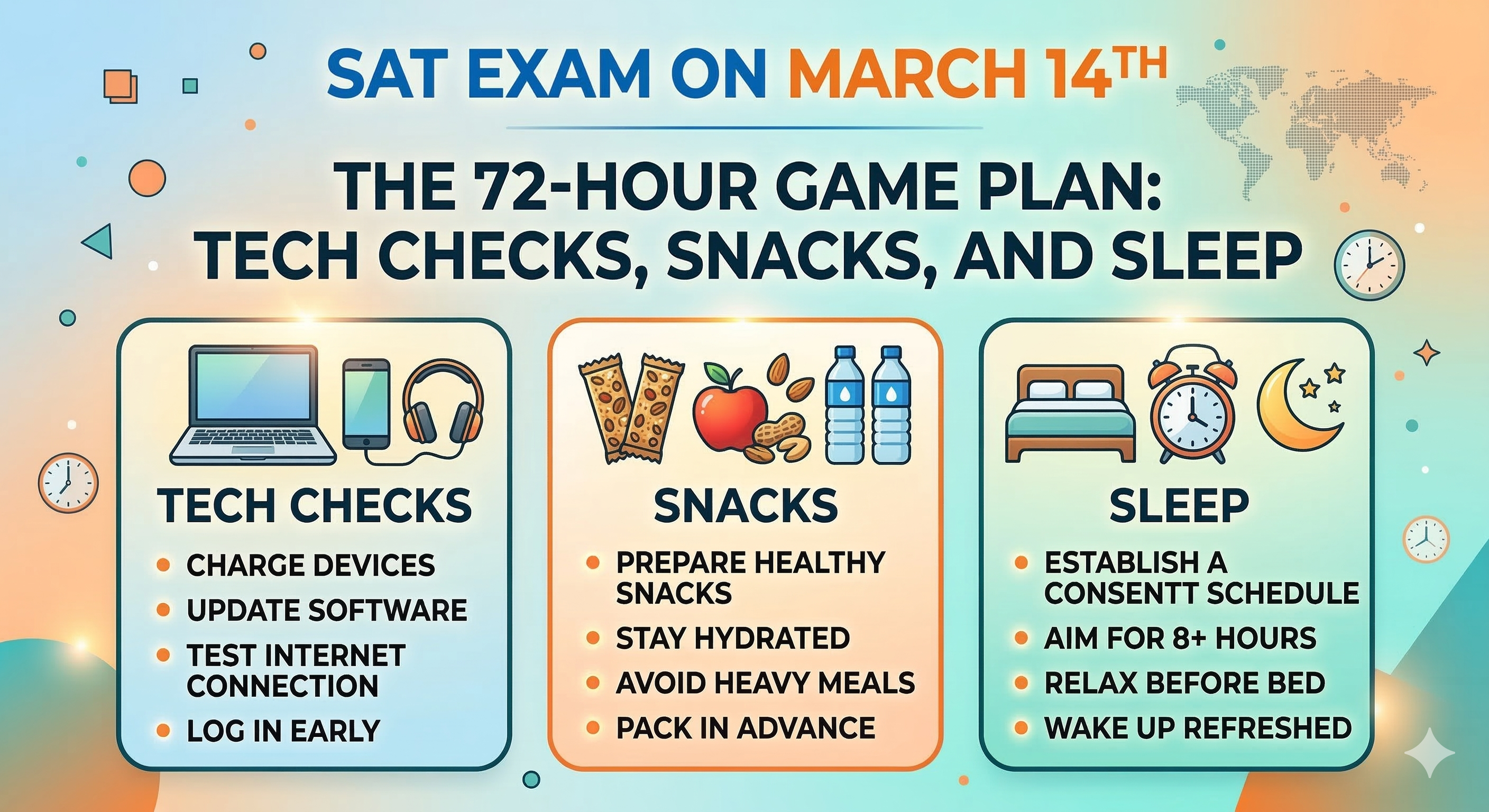
If you’re taking the March 14 Digital SAT, the final 72 hours are not the time to learn new concepts. Instead, your focus should shift to strategic review, technical preparation, and mental readiness.
Because the SAT is now fully digital, students must also ensure they are comfortable with the Bluebook testing app, including tools like the built-in graphing calculator and question flagging feature.
A well-structured 72-hour SAT preparation plan can help you walk into test day calm, confident, and ready to perform at your best.
This guide outlines exactly what students should do 72 hours, 48 hours, and 24 hours before the Digital SAT.
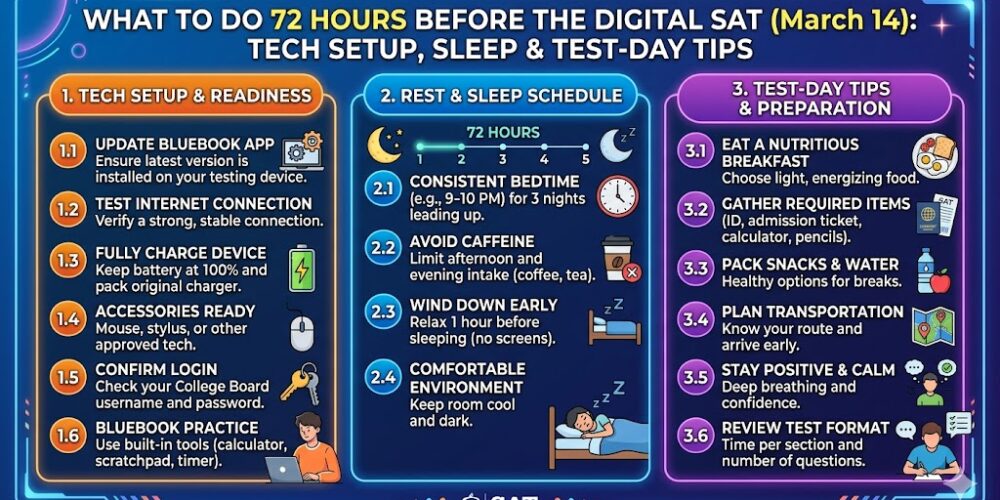
72 Hours Before the SAT (March 11–12): Tech Checks and Final Review
Three days before the exam is the ideal time to finalize your technical setup and light academic review.
1. Verify Your Bluebook App Setup
The SAT is administered through the Bluebook testing platform, so make sure everything works smoothly.
Checklist:
- Update the Bluebook app to the latest version
- Run the exam setup process
- Confirm your device is fully charged
- Pack your charger and power cable
- Prepare your photo ID and admission ticket
Avoid last-minute technical surprises by completing this step early.
2. Review Your Error Log
Focus on high-value review, not new topics.
Spend about 45–60 minutes reviewing:
- Your top 10 recurring mistakes
- Key SAT math formulas
- Important grammar rules for the Writing section
This targeted review reinforces what you already know without overwhelming your brain.
3. Confirm Testing Logistics
Reduce stress by confirming practical details:
- Check the exact testing location
- Verify your arrival time
- Plan your commute route
- Set multiple alarms for test day
Small logistics mistakes can create unnecessary anxiety.
48 Hours Before the SAT (March 12–13): Strategy and Supplies
At this stage, the goal is to maintain mental sharpness while preserving energy.
1. Prepare Test Day Snacks
During the 10-minute SAT break, quick nutrition helps maintain focus.
Recommended snacks:
- Water
- Nuts or trail mix
- Bananas or apples
- Protein bars
Avoid heavy or sugary foods that may cause an energy crash.
2. Light Practice Only
You may review two or three short practice passages or a few math questions just to stay fresh.
Important rule:
Stop immediately if you feel stressed or tired.
At this stage, confidence matters more than additional practice.
3. Prioritize Sleep
Sleep has a major impact on memory recall, focus, and processing speed.
Aim for:
- 8+ hours of sleep
- Consistent bedtime
- Minimal screen time before bed
Good sleep often improves performance more than additional studying
24 Hours Before the SAT (March 13–14): Stay Calm and Prepare
The day before the exam should focus on mental relaxation and final preparation.
1. Avoid Heavy Cramming
Limit review to 30–60 minutes maximum.
If you study, only review:
- Quick math formulas
- Basic grammar reminders
- Strategy notes
Many high scorers skip studying entirely the day before.
2. Prepare Your Test Day Kit
Lay out everything you need in advance:
- Fully charged device
- Charger and cable
- Photo ID
- Admission ticket
- Snacks and water
- Comfortable layered clothing
Having everything ready reduces test-day stress.
3. Relax Your Mind
Your brain performs best when calm.
Helpful activities include:
- Light exercise or a short walk
- Hydration
- Listening to music
- Getting to bed early
SAT Test Day (March 14): Execute Your Strategy
Test day is about execution, not learning.
Morning Routine
- Eat a simple, familiar breakfast
- Avoid trying new foods
- Stay hydrated
Arrive Early
Plan to arrive at least 30 minutes early at the testing center to allow time for check-in.
Use Smart Test Strategies
The Digital SAT includes useful tools inside the Bluebook app.
Smart tactics:
- Flag difficult questions and return later
- Use the built-in graphing calculator efficiently
- Manage time carefully in each module
Remember: one difficult question should never slow down your entire section.
Key Digital SAT Facts to Remember
- Total testing time: about 2 hours and 14 minutes
- Break: 10 minutes
- Format: Fully digital
- Tools available: Graphing calculator, annotation, question flagging
Trust the preparation you have completed over the past months.
Final Thoughts for the March 14 SAT
For many students, the jump from a 1450 to a 1550 SAT score is not about learning more math or grammar. It often comes down to better decision-making under pressure.
Successful students know:
- When to use the digital graphing calculator
- When to skip and return to a difficult question
- How to stay confident if Module 2 becomes more challenging
Whether you prepared through online SAT prep classes, tutoring, or self-study, your focus in the final 72 hours should be simple:
Stay calm, stay rested, and trust your preparation.