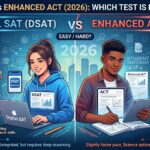



David Coleman, the new president of the College Board, the nonprofit that owns the SAT college admissions exam, announced on February 25 in an e-mail to the organization’s members that the test will be redesigned in “an ambitious effort” to more comprehensively address “the core set of knowledge and skills” that are most important to success in college.
Enter the online tutoring startup Thinkful. Its tagline is “Online school for a better career.” Its aim is to bridge the gap between the skill set you have when you get out of college and the skill set you really need to get a good job: “level-up to find the job you’ll love” as they put it.
In case you hadn’t noticed, teenagers are more eager to focus on a smartphone screen than pretty much anything else in their environment. So why recommend printed SAT or ACT test prep materials when apps are available?
Contrary to popular belief, there is no “guessing penalty” on the SAT. There is, however, a penalty for wrong answers – and the whole point of that penalty is to help ensure that students who guess randomly won’t improve their scores as a result.
The ability to successfully pace yourself — knowing how much time you have left and how much time to spend on a given question – is a key success factor for standardized test-takers. Here are 8 tips to pass along and work on with your students:
Blended learning – a combination of face-to-face and online learning that reduces “classroom contact hours” while incorporating “computer-mediated activities” to form an integrated instructional approach – is getting attention as a solution to a range of academic and financial challenges in education today, particularly in higher ed settings.
Massive Open Online Courses (MOOCs) have come under increasing scrutiny as the modality has grown in popularity. A recent criticism of MOOCs is that their effectiveness is limited because their completion rates are so low.
By linking students’ coursework to their identities, Signature Track provides a way to show achievement and share course records with employers, schools, or whomever you choose.
Among the questions these learning analytics can potentially answer is: How can the online course instructor improve his or her instructional approach and better support students?
Is live online tutoring “the answer” to America’s educational challenges? Probably not – but it can undoubtedly help deliver affordable, high-quality tutoring to many kids and adults.